
Some days, sitting quietly with your breath feels like coming home. On other days, even the thought of trying to focus can feel like one more demand on an already full nervous system. The question of yoga nidra versus meditation is not about deciding which practice is superior. It is about listening honestly to what your body, mind, and spirit are asking for right now.
Both practices can create space between you and the rush of daily life. Both can strengthen your relationship with inner stillness. Yet they take different paths there. One invites alert presence. The other guides you toward profound rest while awareness remains softly awake.
Yoga Nidra Versus Meditation: The Essential Difference
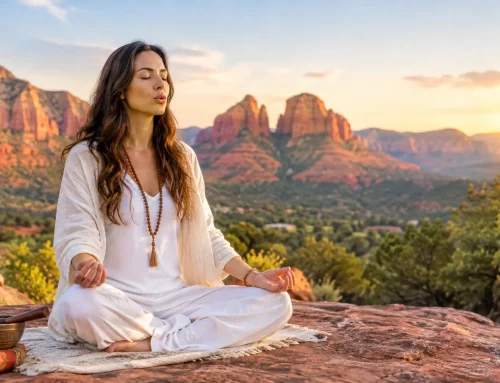
Meditation is a broad family of practices that trains attention. You might rest your awareness on the breath, repeat a mantra, observe thoughts without chasing them, visualize light, or sit in loving-kindness. In some forms, you are awake, seated, and intentionally returning your mind to open space . In kundalini yoga & meditations , we have meditations with mantra and for a specific activation ( ex : to release anxiety or release frustration ).
Yoga nidra, often called yogic sleep, is a guided practice traditionally done lying down. You are invited to settle deeply into the body as your awareness moves through layers of sensation, breath, emotion, imagery, and spaciousness. The body may drift toward sleep, but the invitation is to keep a gentle thread of consciousness present. On our retreats , we offer yoga Nidra every note but it is “ super charged “ because you then receive Crystal bowl therapy .
Think of meditation as learning to sit beside the river of the mind without being carried away by every current. Yoga nidra is more like floating safely in warm water while a trusted guide reminds every part of you that it can let go.
Neither experience must look perfect to be meaningful. A meditation can include a busy mind. A yoga nidra practice can include moments of actual sleep. The value is in the return: returning to breath, returning to sensation, returning to the quiet intelligence within.
What Meditation Offers Your Daily Practice
Meditation is especially supportive when you want to cultivate clarity, steadiness, and a more conscious response to life. It asks you to meet yourself as you are. If irritation arises, you notice it. If grief, joy, restlessness, or a bright insight appears, you make room for it without needing to fix it immediately.
Over time, this practice can change the way you relate to your inner dialogue. You are given a specific meditation when you join us on retreat in : Sedona or Kauai .
Thoughts may still come, but you become less likely to believe every thought is an instruction or a verdict. That is a powerful kind of freedom. You will be inspired to continue the practice at home .
For many Kundalini practitioners, meditation also carries the vitality of breath, mantra, mudra, and sound. Repeating a sacred sound can give the mind a place to rest while awakening a deeper sense of connection. A short daily meditation may be ideal before work, after a difficult conversation, or whenever you feel scattered and want to come back to your center. We have access to over 700 meditations and can direct you which one will best serve your goals .
Meditation does require a certain willingness to be present with what is there. If you are depleted, anxious, or carrying weeks of interrupted sleep, sitting still may initially feel uncomfortable. That does not mean you are doing it wrong. It may simply mean your system needs restoration before it is ready for sustained observation.
What Yoga Nidra Offers When You Are Worn Down
Yoga nidra begins with comfort. You lie down, often with a blanket under and over you, a pillow beneath your knees, and an eye covering if it feels nourishing. The goal is not to force relaxation. The goal is to create conditions where relaxation becomes possible.
A guided yoga nidra or meditation practice may begin with a sankalpa, a heartfelt intention stated in simple, affirmative language. It is not a pressured resolution. It is a seed held gently in the receptive space of the practice. From there, the guide may lead you through a rotation of consciousness in the body, awareness of breath, pairs of sensations such as heaviness and lightness, visualizations, and a return to waking awareness.
This structure can be especially helpful for people who find silence intimidating. You are not left alone with a crowded mind and told to empty it. You are accompanied, step by step, into a quieter relationship with yourself.
Yoga nidra can feel deeply restorative because it permits the body to pause without asking the mind to perform. It is a beautiful choice after travel, during emotionally intense seasons, or when you know you need rest but have trouble giving yourself permission to receive it.
Still, yoga nidra is not always the right fit. If lying down makes you fall asleep every time, you may choose a seated meditation when your intention is mental clarity or spiritual inquiry. Having access to 10 meditations that we practice together , in a 5 or 6 day Sedona retreat , supports you to make change in your daily life . You can practice with eyes open, change position, or stop at any time. Sacred practice always includes choice.
Choosing the Practice That Meets You Today
Rather than making yoga nidra and meditation compete, let your current state guide you. Ask yourself a more useful question: do I need to be gently restored, or do I need to be consciously gathered?
Having a daily meditation practice allows you to strengthen focus, self-awareness, devotion, or emotional balance. Even five minutes of breath awareness or mantra can shift the quality of a day. A morning meditation is often a meaningful way to set the inner tone before the outside world makes its requests.
Choose yoga nidra & Your given meditation when you feel overstimulated, exhausted, jet-lagged, emotionally tender, or simply unable to settle through effort. It can be a wise practice in the late afternoon, before bed, or after a long day of caregiving, work, or travel. You do not need to earn this rest. Your body is not an obstacle to spiritual practice. It is part of the sacred path.
There is also a place for both. You might begin with twenty minutes of Kundalini yoga , then ten minutes of meditation and follow it with a longer yoga nidra session once or twice a week. Or you may use yoga nidra for a season, then feel naturally drawn back to a more active meditation practice. Spiritual growth is not linear. Diane Cline at Yoga inspirations has given 162 retreats in the past 14 years and is an expert guide to assist you thru the Retreat experience ( and all the yoga , meditation and nervous system reset ).
How Sound Can Deepen Either Experience
Sound offers a bridge between effort and surrender. A mantra in meditation gives the mind a rhythmic, devotional anchor. The tones of crystal bowls can support a yoga nidra environment by helping the senses soften and drawing attention away from habitual mental noise.
The sound itself is not something to chase. Let it arrive, move through you, and fade. Notice where you feel vibration in the body. Notice what changes when the final tone dissolves into silence. That silence is not empty. It is often where a deeper listening begins.
In a retreat setting, this kind of practice can become especially potent. When daily logistics fall away and you are held by intentional space, nourishing food, nature, movement, ceremony, and community, your system has room to remember another rhythm. Yet the real gift is bringing a small, honest version of that experience home with you.
A Simple Way to Begin
Set aside fifteen minutes and remove the expectation that anything dramatic needs to happen. If you choose meditation, sit comfortably and place one hand over your heart or lower belly. Let the breath be natural. Silently repeat a mantra, follow the inhale and exhale, or simply notice what is present. When attention wanders, return with kindness.
If you choose yoga nidra, lie down somewhere you will be warm and undisturbed. Place a hand on your body and silently offer yourself a simple intention such as, “I welcome peaceful rest,” or, “I trust my inner wisdom.” Then slowly move your awareness from your feet to the crown of your head, pausing at each area without needing to change anything.
The most transformative practice is rarely the one that looks impressive. It is the one you can meet consistently, with tenderness. Whether you sit in stillness or rest in yogic sleep, let each session be a quiet promise: I am willing to change and grow . Join us for a Sedona or Kauai retreat : Www.yogainspirations.com






Leave A Comment