
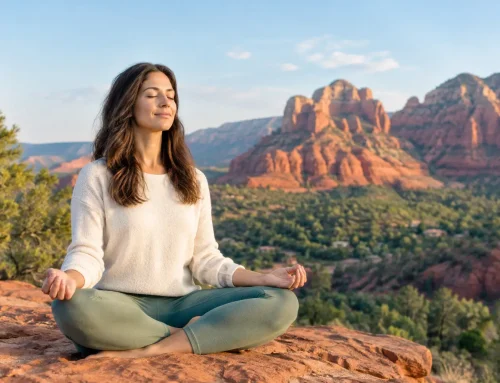
Sedona yoga and meditation can feel less like a class on a calendar and more like a return to yourself. The red rocks, wide desert sky, and quiet pauses between daily demands create a natural invitation to slow down. For many travelers, that spaciousness is the beginning of a real reset: a chance to breathe more fully, listen more honestly, and remember what brings life into harmony.
This is not about perfect poses or arriving with years of yoga experience. It is about meeting yourself where you are, then allowing intentional movement, meditation, sound, and sacred surroundings to support the next step of your journey.
Why Sedona Calls People Back to Practice
There are places that help us notice what has been covered by busyness. Sedona is one of them. Its open landscapes can make room for reflection, while the stillness of the desert invites a different rhythm than the one many people keep at home.
A retreat setting also creates healthy distance from familiar patterns. When you are not rushing to work, answering every message, or caring for everyone else first, your nervous system has a chance to soften. That is often when a meditation practice becomes more accessible. You may notice that your breath is shallow, that your heart has been asking for rest, or that a long-held question is ready to be heard.
The destination alone is not the healing. The transformation comes through what you choose to practice while you are there. Guided yoga, breathwork, meditation, nourishing meals, meaningful conversation, time in nature, and rest can work together to create a lasting shift.
Sedona Yoga and Meditation Beyond the Physical Practice
A spiritually centered yoga experience honors the body without treating the body as the final goal. Movement can release tension from the hips, shoulders, spine, and jaw, but it can also reveal the emotional holding patterns we carry. A gentle posture held with conscious breath may bring up grief, gratitude, relief, or a surprising sense of joy.
Kundalini yoga is especially supportive for those seeking an inner practice. It blends movement, breath, meditation, mantra, and deep relaxation in purposeful sequences called kriyas. Some practices are energizing and clarifying. Others are calming, heart-opening, or grounding. The right practice depends on what you need that day.
If you have only experienced yoga as exercise, Kundalini can feel wonderfully different. There may be rhythmic movement, breath patterns, chanting, or moments of stillness. None of these require you to be flexible or spiritually certain. They simply ask for your willingness to participate with care.
Meditation offers another doorway. Sitting quietly is valuable, but it is not the only form of meditation. A guided breath meditation, a walking practice among the rocks, a mantra, or resting inside the tones of crystal bowls can all help settle mental noise. For people who say they cannot meditate because their minds are too busy, a structured practice is often far more supportive than trying to force silence.
What a Sacred Retreat Rhythm Can Offer
A well-held retreat is not a schedule packed from morning to night. It balances shared practice with personal space. You need time to integrate, journal, nap, wander, or simply sit outside without needing to accomplish anything.
A morning might begin with Kundalini yoga and a meditation to set an intention. Later, an excursion or sacred site visit can bring the teachings into lived experience. Evening sound healing or ceremony may offer a gentle way to release the day and return to the heart. The details vary, but the rhythm matters: practice, receive, reflect, and rest.
For couples, this kind of space can renew connection without demanding that every conversation be solved at once. Sharing a new environment and a meaningful practice can create room for tenderness, listening, and fresh perspective. Solo travelers often find something equally precious: a supportive community that does not require them to perform or explain every part of their path.
Many returning retreat guests value that sense of belonging. They come for personal renewal, yet leave with friendships, practices, and reminders that they are not alone in wanting a more conscious, joyful life.
The Role of Sound Healing
Sound healing can be a beautiful complement to yoga and meditation, particularly for people who find it difficult to unwind through stillness alone. The sustained tones of crystal bowls, chimes, voice, and other instruments give the mind something gentle to rest with. As the body relaxes, the experience can feel deeply calming and emotionally spacious.
It is helpful to keep expectations open. Sound healing is not a replacement for medical or mental health care, and every person responds differently. Some guests feel peaceful immediately. Others notice emotions rise before a sense of release appears. Both experiences can be meaningful when held in a safe, skilled, and compassionate environment.
For yoga teachers and devoted students, a retreat can also become an opportunity to learn how sound is offered responsibly. Training in crystal bowls and meditation coaching can deepen a personal practice while giving participants tools to serve their own communities with integrity.
How to Prepare for a Meaningful Experience
You do not need to arrive as a different person in order to benefit from a Sedona retreat. In fact, trying to become more serene before you go can miss the point. Come honestly. Bring your tiredness, your curiosity, your hope, and even your resistance.
A few simple preparations can help. Choose comfortable layers for changing desert temperatures, a journal that feels inviting to write in, and a water bottle. Consider reducing your schedule before departure if possible, so you are not carrying a week of urgency into your first meditation. Let people at home know when you will be less available.
It can also help to set a gentle intention rather than a rigid outcome. Instead of demanding, “I need to fix my whole life,” try, “I am willing to hear what my heart needs.” An intention gives your practice direction without placing pressure on every moment to be profound.
If you are new to Kundalini yoga or sound healing, let your teacher know about injuries, pregnancy, health concerns, or anything that may affect your participation. A thoughtful facilitator can offer modifications and help you choose an approach that feels supportive. There is wisdom in honoring your own pace.
Bringing Sedona Home With You
The most valuable part of a retreat is often what remains after the suitcase is unpacked. A powerful week can inspire you, but small, repeated practices are what help a new sense of clarity take root in everyday life.
Choose one practice you can truly keep. That might be three minutes of long, slow breathing before coffee, a ten-minute Kundalini meditation in the afternoon, or a weekly sound bath at home with a favorite recording. Keep it simple enough that it can travel with you through ordinary days.
You may also want to protect one small pocket of quiet each week. Turn off the noise, light a candle, place your hands over your heart, and ask yourself what feels true right now. That question is a practice in itself.
For more than two decades, Diane and Yoga Inspirations have guided thousands of students through Kundalini yoga, meditation, sound healing, and sacred travel experiences designed with deep care. The intention is never to hand you a temporary escape. It is to help you remember your own capacity for joy, connection, health, and spiritual renewal.
Let Sedona be more than a beautiful place you visit. Let it be a loving reminder: your inner life deserves time, attention, and sacred space. Get ready to live your best life ever, one conscious breath at a time.


Leave A Comment