A meaningful journey rarely begins at the airport. It begins the moment you admit that your usual routines are no longer giving your spirit enough room to breathe. This spiritual travel planning guide is for that moment: when you want more than a beautiful view and a full itinerary. You want space to hear yourself again, reconnect with your body, and remember the joy that is already waiting within you.
Sacred travel can be deeply restorative, but it is not a shortcut around real life. The destination matters, yet the intention you bring matters more. With loving preparation, a retreat or spiritual journey can become a turning point that continues to support your health, relationships, and daily practice long after you unpack.
Begin With the Inner Reason for Going
Before comparing flights, ask a quieter question: what am I truly seeking? You may be longing for rest after a demanding season, a deeper meditation practice, renewed connection with your partner, or the courage to step into a new chapter. There is no wrong answer, but clarity helps you choose an experience that serves your real needs instead of simply filling a calendar.
Try writing one honest sentence in a journal: “I am taking this journey so I can…” Let the answer be simple. Perhaps you want to soften grief, reclaim your energy, learn sound healing, or spend time among people who understand the value of inner work. This sentence becomes an anchor when travel details get busy or when your mind asks whether you should have stayed home.
It also helps to release the pressure to return as a completely different person. Spiritual travel is not a performance. It is an invitation to come home to yourself with more tenderness, awareness, and trust.
Choose a Destination That Supports Your Intention
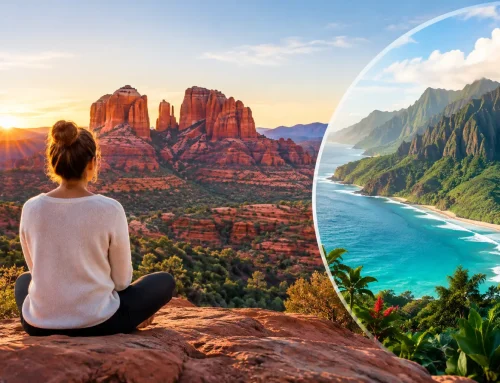
A sacred destination is not necessarily remote or difficult to reach. It is a place whose natural rhythm, culture, and setting help you slow down enough to listen. The red rocks of Sedona may call to someone seeking grounding and expansive perspective. Kauai and the Big Island of Hawaii can offer oceanic spaciousness, lush beauty, and a powerful reminder of nature’s living intelligence. Greece, Croatia, and New Zealand can invite wonder through ancient landscapes, clear waters, and a sense of stepping outside familiar patterns.
Choose with your energy in mind. If you are exhausted or recovering from a stressful time, a journey with long transfers, a packed schedule, and constant location changes may leave you more depleted. A single beautiful home base, nourishing meals, and time for rest may be the wiser choice.
On the other hand, if you feel stuck and ready for fresh perspective, a more adventurous sacred travel tour can be energizing. The key is not choosing the most dramatic destination. It is choosing the environment that supports who you are now and who you feel called to become.
Look Beyond the Scenery
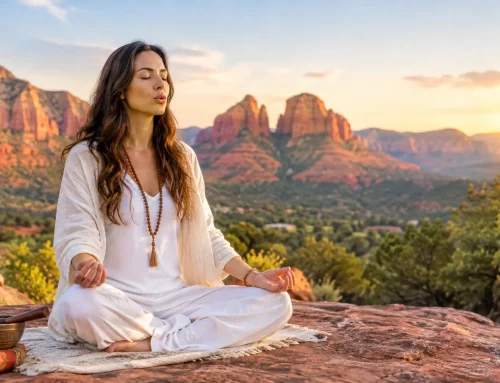
Beautiful scenery is a blessing, but the structure of the experience shapes its impact. Consider whether the journey includes daily meditation, Kundalini yoga, breathwork, sound healing, silent reflection, sacred ceremony, or unhurried time in nature. For many travelers, the most lasting moments are not the photographed ones. They are the early morning practice, the shared laughter after a deep release, and the realization that their nervous system finally feels safe enough to rest.
A well-led retreat also creates a container. Expert guidance matters, especially when your intention involves emotional healing, spiritual growth, or learning a new modality. Ask how much personal support, teaching, and free time are included. Some guests thrive with a full schedule of classes and excursions, while others need generous open space to integrate.
A Spiritual Travel Planning Guide for the Practical Details
Sacred travel still requires practical care. When your body feels supported, your spirit has more room to receive. Begin planning early enough that you can make decisions without rushing. Retreats with intimate group sizes often fill well ahead of time, particularly when they offer a carefully curated experience and trusted teachers.
Give yourself permission to arrive a day early when crossing several time zones, if your budget and schedule allow. Jet lag is real, and an extra night can turn a rushed arrival into a gentle landing. Hydrate before and during your flight, choose comfortable clothing, and plan a quiet first evening instead of trying to do everything immediately.
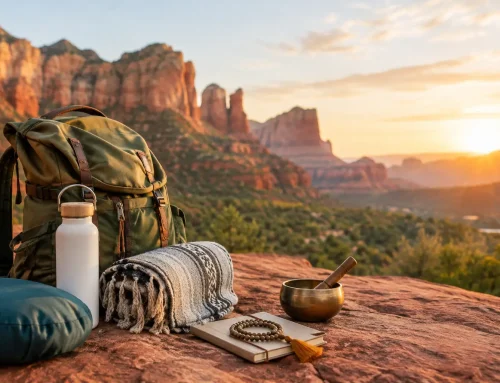
Pack for practice rather than perfection. Bring clothing you can move and breathe in, a shawl or light layer for meditation and evening sessions, a journal, a refillable water bottle, and any personal items that help you feel grounded. If you use a meditation cushion, eye pillow, essential oil, or mala at home, one small familiar object can help your practice travel with you.
Leave room in your suitcase and schedule. You do not need a different outfit for every photograph, and you do not need to attend every optional activity. Spaciousness is not wasted time. It is where insight often has a chance to rise.
Prepare Your Practice Before You Leave
You do not have to be an advanced yogi or an experienced meditator to benefit from a spiritual retreat. In fact, arriving with beginner’s mind can be a gift. Still, a small practice in the weeks before departure helps your system recognize the invitation to slow down.
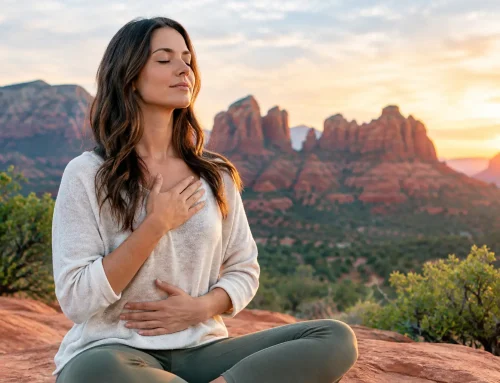
Set aside ten minutes each day for a simple ritual. Sit comfortably, place one hand on your heart and one on your belly, and breathe slowly. Notice what is present without trying to fix it. You might add a short Kundalini meditation, gentle movement, or a few minutes of listening to calming sound. Consistency is more valuable than intensity.
If you are traveling with a partner, speak together before the journey about what each of you hopes to receive. One person may want connection and shared adventure, while the other may need solitude and quiet. Naming those differences with love prevents misunderstanding later. A retreat can strengthen a relationship beautifully, but each person still needs room for an individual experience.
Set Gentle Boundaries Around Technology
Your phone can capture memories, help you navigate, and keep loved ones reassured. It can also pull your attention out of the very experience you traveled to have. Decide before you leave when you will check messages and how much you want to share in real time.
You may choose one brief check-in each evening and keep your phone away during meals, classes, ceremonies, and time in nature. This is not about being rigid. It is about allowing your senses to become available again. The sound of the ocean, a crystal bowl, or birds at sunrise cannot compete with a constant stream of notifications.
Let the Group Experience Deepen, Not Replace, Your Journey
One of the quiet gifts of retreat travel is community. People often arrive as strangers carrying different stories, careers, ages, and life experiences. Through shared practice, they remember that the desire for peace, joy, and belonging is profoundly human.
Be open, but do not force intimacy. Share what feels true, listen without needing to offer advice, and let friendships unfold naturally. Some connections will become lifelong. Others may last only for the length of the retreat but still offer exactly the mirror or encouragement you needed.
A skilled teacher can make a tremendous difference here. At Yoga Inspirations, sacred travel experiences are shaped by Diane’s decades of teaching, her devotion to Kundalini yoga, meditation, and sound healing, and her care in bringing together high-quality local teachers. That kind of leadership helps guests feel held while leaving room for their own discoveries.
Return Home With a Plan for Integration
The journey does not end when you return to your usual responsibilities. In many ways, this is where the deeper work begins. A common mistake is trying to recreate every beautiful habit from a retreat on the first Monday back. That approach can turn inspiration into another demand.
Instead, choose one or two practices that feel realistic and alive. It might be ten minutes of morning meditation, a weekly sound bath, a walk without your phone, or a commitment to pause before reacting in difficult conversations. Put these practices on your calendar as an act of respect for the person you became willing to meet on your journey.
Within a few days of returning, write down what surprised you. What did your body feel like when you were rested? Which teaching stayed with you? What do you want less of, and what do you want more of? These reflections keep the experience from fading into a collection of lovely photographs.
A sacred journey is not meant to help you escape your life. It can help you inhabit it more fully. Travel with an open heart, make room for rest, and trust that even one conscious breath in a new landscape can remind you: you are allowed to live your best life with greater harmony, joy, and love.