
The Big Island asks you to slow down before you are ready. You may feel it while watching steam rise from volcanic earth, listening to rain move through the forest, or standing beside an ocean that never hurries. This Big Island meditation guide is an invitation to meet that spaciousness with presence – not by trying to have a perfect spiritual experience, but by letting your breath, body, and attention arrive where you are.
Meditation on Hawai’i Island can be deeply restorative because the landscape naturally interrupts routine. Yet the island is not a backdrop for self-improvement. It is a living home with a rich Native Hawaiian culture, powerful ecological contrasts, and places that deserve humility. The most meaningful practice begins with respect: move gently, follow local guidance, stay on marked paths, and let your time here be more listening than taking.
Begin With Intention, Not an Itinerary
Before choosing a beach, a retreat, or a meditation style, take five quiet minutes to name what has brought you here. Perhaps you are tired of carrying everyone else’s needs. Perhaps a life transition has made your usual answers feel thin. Or perhaps you simply want to feel your own joy again.
An intention is not a demand for an outcome. “I will heal everything this week” puts pressure on a tender process. Try an intention that leaves room for grace: “I am willing to hear myself clearly,” “I make space for renewal,” or “I welcome greater harmony in my body and relationships.” Write it in a journal, speak it softly, or hold it at the center of your heart before practice.
For couples, a shared intention can bring a different quality to the journey. Rather than trying to solve every issue on vacation, sit together for a few minutes each morning and ask, “How can I be more present with you today?” It is a simple question, but it can shift a whole day.
A Big Island Meditation Guide for Every Energy Level
The right practice depends on your nervous system that day. After a long flight, strong breathwork or extended sitting may feel like too much. A gentle walk, a hand on the heart, and three conscious breaths can be a complete practice. When you feel settled, you may be ready for a deeper Kundalini meditation, mantra, sound journey, or quiet contemplation.
Morning: Meet the Day Before It Speeds Up
Wake before your phone becomes the loudest voice in the room. Sit near an open window, on a lanai, or anywhere you can feel fresh air. Keep your spine comfortably tall, rest your hands on your thighs, and close your eyes or soften your gaze.
Breathe in through the nose for a count of four. Exhale slowly for a count of six. Continue for three to five minutes. The longer exhale is an invitation to soften the body’s alertness without forcing calm.
Then ask yourself: What does my soul need today? Do not debate the answer. Notice the first quiet response, whether it is rest, courage, play, forgiveness, movement, or stillness. Let that response guide one small choice during the day.
Midday: Let Nature Hold Your Attention
A walking meditation is especially beautiful on the Big Island because there is so much to see. The practice is not to collect more sights. It is to let one sense lead you back to the present.
Choose a safe, permitted path or a quiet stretch of shoreline where conditions are calm. Walk slowly enough to feel the changing ground under your feet. For several minutes, place attention on sound: wind, birds, waves, rain, or the simple rhythm of your steps. When thoughts pull you toward plans and worries, gently return to listening.
Avoid meditating near unstable cliffs, powerful surf, active lava areas, or places marked as closed. Being present also means being practical. The island’s elements are magnificent, and they deserve wise attention.
Evening: Release What You Do Not Need to Carry
At the end of the day, lie down or sit comfortably with a journal nearby. Place one hand on your belly and one on your heart. Take several unhurried breaths, then reflect on three questions: What gave me energy today? What drained my energy? What am I ready to release before sleep?
You do not need to write pages. A few honest words are enough. If emotion rises, let it be part of the practice. Meditation is not always silent bliss. Sometimes it is the moment we stop pushing away what has been asking for compassionate attention.
Choose Places With Care and Respect
The Big Island offers countless beautiful settings, but not every beautiful place is appropriate for a personal ceremony, group practice, or photo session. Some locations hold cultural and spiritual significance, and access can change according to weather, land stewardship, and community needs. Never assume that quiet means available.
Often, the most nourishing place to meditate is your own lodging: a garden chair at sunrise, a shaded corner after rain, or a simple indoor space prepared with a candle-free altar, a meaningful stone, and your journal. You do not need a dramatic view to receive a profound inner shift.
If you do practice outdoors, leave no trace. Keep your voice low, do not move rocks or natural objects, and resist the urge to create offerings in places where they do not belong. Your reverence is felt in how lightly you tread.
Deepen the Experience With Sound and Breath
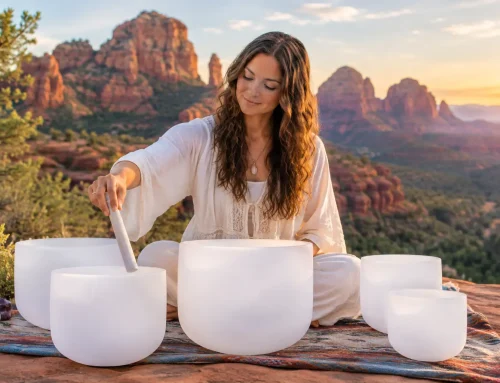
Sound can help the mind settle when silent meditation feels frustrating. A softly repeated mantra, gentle humming, or crystal bowl meditation can create a steady point of focus. The vibration is not meant to drown out your thoughts. It gives your awareness something kind and consistent to return to.
Try humming on a long exhale for five minutes. Feel the vibration in your chest, throat, and face. This is especially supportive for travelers who have been in constant conversation, decision-making, or caregiving. After the final hum, sit in silence and notice the quality of your inner space.
Kundalini yoga and meditation can also bring powerful energy to the surface. A guided setting is often best for people who are new to these practices or who want to move beyond a casual vacation ritual. An experienced teacher can offer structure, modify a practice when needed, and create a container where insight has room to settle.
At Yoga Inspirations, Diane brings more than 20 years of experience in yoga, meditation, and sound healing to sacred travel experiences. Her retreats are intentionally curated for the people in the room, blending foundational practice, heartfelt ceremony, and the kind of supportive community that helps a new insight become part of daily life.
Make Space for Integration
The deepest gift of a retreat or solo meditation journey is not the feeling you have on the island. It is what remains when you return home. Leave some space in your final day for integration rather than rushing from a powerful practice straight into packing, airports, and messages.
Choose one small ritual to carry forward. It may be five minutes of morning breathwork, a weekly sound meditation, a journal question before bed, or a shared check-in with your partner. Keep it realistic. A practice you can return to on an ordinary Wednesday is more valuable than a grand promise made under a tropical sky.
The Big Island may awaken something luminous within you, but that light does not belong only to the island. Each time you pause, breathe, listen, and choose presence, you give it a place to live in your everyday life.

Leave A Comment