
Your breath is already carrying you through every meeting, memory, worry, and moment of joy. When you learn Kundalini breathing, you begin to meet that breath with intention. Rather than trying to force a dramatic spiritual experience, you create a sacred pause where the body can soften, the mind can clear, and your own inner guidance has room to be heard.
Kundalini Yoga uses breath as a direct pathway to awareness. Some breathing practices are calming and restorative. Others are energizing, clearing, and awakening. The beauty of a steady practice is that it can meet you honestly where you are – whether you are beginning your meditation journey, moving through a season of change, or longing to bring more joy and harmony into daily life.
What Kundalini breathing is meant to cultivate
In Kundalini Yoga, breathwork is often called pranayama. Prana means life-force energy, and ayama can be understood as extending or directing that energy. This is not simply about taking larger breaths. It is a conscious relationship with the life moving through you.
A Kundalini breathing practice may be paired with a posture, a mantra, meditation, or stillness. The breath gives the mind something clear and immediate to follow, which can be especially helpful when thoughts are racing. With regular practice, many people notice a greater capacity to pause before reacting, settle after stress, and reconnect with a quieter center.
The experience is personal. You may feel warmth, tingling, emotion, spaciousness, or simply the ordinary comfort of breathing more fully. None of these responses is a measure of success. Kundalini practice is not about chasing sensations. It is about becoming more present, more compassionate, and more available for the life you are here to live.
Before you begin: create a safe, simple container
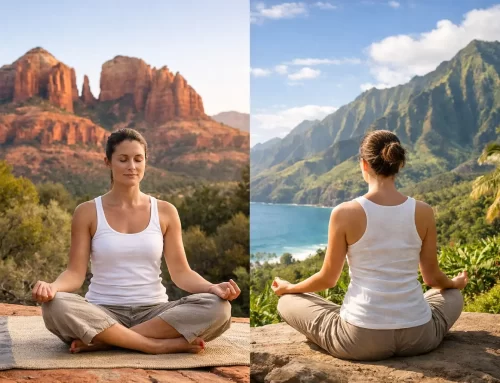
Choose a time when you can be undisturbed for five to fifteen minutes. Morning can be beautiful because it sets the tone for your day, while evening may help you release the mental noise you have carried. Sit on a cushion, chair, or folded blanket with your spine comfortably tall. You do not need to look like a perfect yogi. You only need to be able to breathe without strain.
Wear comfortable clothing and practice in a well-ventilated space. If you have a medical condition affecting your heart, lungs, blood pressure, or nervous system, are pregnant, or have a history of panic attacks, seizures, or trauma, begin with gentle breathing only and consult a qualified health professional and experienced teacher before practicing more vigorous techniques. A trauma-informed teacher can help you adapt the practice without pressure.
One principle matters above all: never push through dizziness, pain, panic, or a feeling of overwhelm. Return to natural breathing, open your eyes, and rest. Spiritual practice should deepen your relationship with yourself, not ask you to override your body’s wisdom.
Learn Kundalini breathing through long, deep breaths
Long Deep Breathing is a nourishing place to begin. It is accessible, grounding, and often surprisingly powerful when practiced with patience. It teaches the body that there is time, space, and support in this moment.
Sit tall with your shoulders relaxed. Place one hand on the lower belly and the other over the heart if that feels comforting. Close your eyes or lower your gaze. Inhale slowly through the nose, allowing the belly to expand first, then the ribs, then the upper chest. Exhale slowly through the nose, releasing from the upper chest, ribs, and belly.
Let the inhale and exhale become smooth and unhurried. There is no need to count at first. Simply make the breath comfortable and full without forcing it. Continue for three to five minutes.
As you practice, notice where you habitually hold yourself. Perhaps the jaw softens. Perhaps the belly resists receiving the inhale. Meet these places with kindness. The goal is not to perform the breath correctly but to allow your system to remember ease.
If your mind wanders, quietly repeat a simple phrase on the exhale, such as, “I am here,” or “Sat Nam,” a Kundalini mantra often translated as “truth is my identity.” Let the words be gentle companions, not another task to accomplish.
A small adjustment that changes the practice
Many beginners lift their shoulders and tighten the throat while trying to breathe deeply. Instead, imagine the breath widening the lower ribs and back body. Keep the face soft. A calm, steady breath is more beneficial than the biggest breath you can take.
Try practicing for the same number of minutes each day for one week. Consistency builds familiarity, and familiarity allows your nervous system to trust the practice.
When to explore Breath of Fire
Breath of Fire is one of the most recognized Kundalini breathing techniques. It is rhythmic and energizing, created through a quick, even pumping action at the navel. The inhale and exhale are both active, usually through the nose, while the chest remains relatively steady.
It can feel revitalizing and clearing, but it is not the right starting point for every person or every day. If you are depleted, anxious, overheated, recovering from illness, or new to breathwork, Long Deep Breathing may be the wiser choice. There is profound value in choosing the practice that supports your actual state rather than the one that appears more advanced.
When you are ready to explore Breath of Fire, begin with only 15 to 30 seconds under qualified guidance. Think of a gentle, rhythmic pumping from the navel rather than a forceful movement from the chest or shoulders. Rest afterward with a few natural breaths and notice how you feel.
Avoid Breath of Fire during pregnancy, menstruation if it feels uncomfortable, or when you have uncontrolled high blood pressure, significant cardiovascular concerns, recent abdominal surgery, vertigo, or a condition for which forceful breathing is not advised. Do not practice it with breath retention unless you have been personally instructed by an experienced teacher.
Let the breath become a daily relationship
The most transformational practice is often the one you actually return to. You do not need an hour, a mountaintop, or a perfectly quiet house to receive the gifts of conscious breathing. Five sincere minutes beside your bed can become a meeting place with your soul.
You might begin by lighting a candle, sitting with a meaningful crystal, or placing a hand on your heart. These simple rituals signal that this time matters. Some people find that the resonant sound of a crystal bowl after breathwork helps the body settle into meditation. Others prefer silence. It depends on what helps you feel more present rather than more distracted.
A supportive practice can be as simple as this: sit down, take three slow breaths, practice Long Deep Breathing for five minutes, then remain still for one minute. Notice one thing you are grateful for and one quality you want to carry into your day. Over time, that small devotion can influence how you speak, rest, listen, and respond to the people you love.
The deeper lesson of Kundalini breathwork
Breathwork can bring emotions closer to the surface. This is not always comfortable, but it can be meaningful. If tears arise, you do not need to analyze them immediately. If restlessness arrives, you do not need to judge it. Breathe naturally, stay connected to the room around you, and give yourself permission to stop.
Practicing with an experienced teacher and a caring community can be especially supportive when you want to go deeper. In a retreat setting, away from familiar demands, breath, meditation, movement, sound healing, and sacred ceremony can create space for a more wholehearted reset. The destination is never the whole answer, but stepping out of routine can help you hear what routine has been drowning out.
Diane and the Yoga Inspirations community have witnessed how a lovingly held practice can help people reconnect with joy, health, purpose, and one another. Yet the real teacher remains your own direct experience. Each breath invites you back to it.
Let your next practice be modest and sincere. Sit down, feel the ground beneath you, and take one unhurried inhale. Your breath does not ask you to become someone else. It asks you to come home to the person you have been all along.






Leave A Comment