
Your hands are already part of your meditation. They may rest in your lap, hold a cup of tea, reach for your heart, or tense without you noticing. Learning how to use meditation mudras brings gentle awareness to this familiar part of the body, giving your mind a simple, meaningful place to return when thoughts begin to wander.
Mudras are intentional hand gestures used in yoga and meditation. In Kundalini yoga, they are often paired with breath, mantra, posture, and a clear inner focus. They are not complicated poses to perfect. They are small physical reminders of what you are choosing to cultivate: peace, receptivity, vitality, discernment, or compassion.
The beauty of a mudra practice is that it travels with you. You can use one before a morning meditation, while sitting quietly beneath a tree, during a sound healing session, or in the moments before sleep. A few minutes of conscious practice can become a sacred pause in a full day.
Why Hand Gestures Can Deepen Meditation
Traditional yogic teachings view the hands as energetic pathways that reflect and influence the whole being. Each finger is associated with a quality or element: the thumb with fire and will, the index finger with wisdom and expansion, the middle finger with patience and balance, the ring finger with vitality. During kundalini yoga, after postures , we return to the : thumb and index finger together , which is “ gyan mudra “, tapping into your inner wisdom.
Whether you relate to this energetically, symbolically, or simply as a mindfulness tool, mudras offer a clear benefit: they create a physical anchor. When the mind races ahead toward a meeting, an old memory, or tomorrow’s task list, the light touch of finger to finger can invite you back to this breath, this body, this moment.
A mudra does not need to force a particular experience. You may feel peaceful right away, or you may simply notice your shoulders soften over time. Consistency is what matters and people often attend spiritual retreats , so when they return home , they have consistency.
How to Use Meditation Mudras With Ease
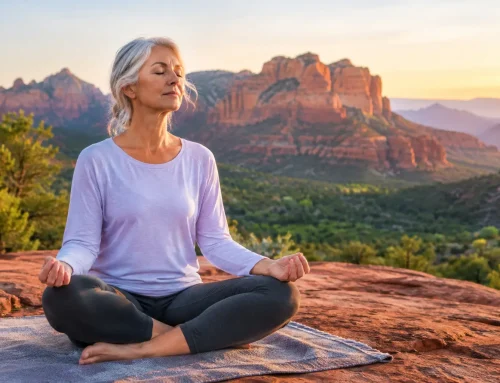
Begin by choosing a comfortable seat. You may sit on a cushion on the floor, upright in a chair with both feet grounded, or recline if sitting is not comfortable for your body. Lengthen gently through the spine, relax the jaw, and allow the shoulders to settle away from the ears.
Place your hands where they can relax: on your thighs, at your knees, or softly in your lap. There is no prize for holding a mudra high or creating tension in the fingers. Yoga inspirations and Diane cline recommends : thumb to index finger together, eyes closed , and breathing 4 part inhale then 2 part exhale . This is known as the meditation to “ reduce anxiety “.
Choose one mudra and stay with it for three to eleven minutes. If you are new to meditation, even two minutes is a beautiful beginning. Close the eyes if that feels safe and natural, or lower your gaze toward the floor. Breathe slowly through the nose, allowing the exhale to be easy and complete.
Before you begin, offer your practice a simple intention. It might be, “I return to myself,” “I welcome clarity,” or “I am willing to receive this moment.” An intention is not a demand. Our spiritual retreats give you access to 6 guided meditations and mudras we share with you . Your spiritual expansion is usually felt by day 2!
Six Meditation Mudras to Explore
Gyan Mudra for wisdom and focused awareness
Touch the tip of the index finger to the tip of the thumb, keeping the other three fingers long but relaxed. Rest the backs of the hands on the knees with the palms facing up.
Gyan Mudra is one of the most familiar gestures in Kundalini yoga and meditation. It is a wonderful choice when you feel scattered, when you are beginning a new spiritual practice, or when you want to sit with a question without rushing toward an answer. As you breathe, imagine creating space around your thoughts rather than trying to stop them.
Shuni Mudra for patience and commitment
Touch the tip of the middle finger to the thumb, with the remaining fingers relaxed. Place the hands on the knees or in the lap.
Shuni Mudra can be meaningful during periods of change, healing, or long-term growth. Some transformations cannot be hurried. This gesture invites the steady presence needed to continue showing up for yourself, one breath and one choice at a time. It is especially supportive when you are practicing consistency rather than searching for a dramatic breakthrough.
Surya Mudra for warmth and renewed energy
Bend the ring finger toward the palm and gently place the thumb over it. Keep the index finger, middle finger, and little finger extended without strain.
In yogic traditions, Surya Mudra is associated with the sun and the element of fire. Use it in a morning practice when you want to awaken your inner light or when a season of life calls for courage and forward movement. Because it can feel energizing, it may be less suited to a late-night meditation if your intention is deep rest. Your own experience is the best guide.
Prithvi Mudra for grounding and steadiness
Touch the tip of the ring finger to the thumb, allowing the other fingers to extend softly. Let your palms rest wherever they feel most natural.
Prithvi Mudra is associated with earth energy. It can be a beautiful companion after travel, during an emotionally full week, or whenever you feel pulled in too many directions. As you sit, feel the weight of your body supported by the chair, cushion, or ground. Let the breath remind you that you do not have to carry everything at once.
Buddhi Mudra for inner listening
Touch the tip of the little finger to the thumb. Keep the other fingers relaxed and open.
Buddhi Mudra is often connected with communication and intuition. Try it before journaling, a heartfelt conversation, or a meditation in which you are seeking to hear your own wisdom more clearly. Instead of asking, “What should I do?” you might quietly ask, “What is true for me right now?” Then allow silence to be part of the response.
Lotus Mudra for an open heart
Bring the palms together, then keep the heels of the hands, thumbs, and little fingers touching as you open the remaining fingers outward like a flower. Hold the mudra near the heart center if that is comfortable.
Lotus Mudra can be especially moving during a practice of gratitude, compassion, or forgiveness. It honors the truth that tenderness and strength can live together. If bringing the hands to the heart creates strain in the shoulders, rest the gesture lower in the lap instead.
Pair Your Mudra With Breath or Mantra
A mudra becomes more powerful as a meditation support when you give the mind one additional point of focus. Keep it simple. With each inhale, silently receive the breath. With each exhale, silently release what you no longer need to grip.
You may also repeat a gentle phrase such as “Sat Nam,” a Kundalini mantra often understood as a remembrance of true identity. Mentally hear “Sat” on the inhale and “Nam” on the exhale. If mantra does not feel aligned for you, count each breath from one to ten, then begin again.
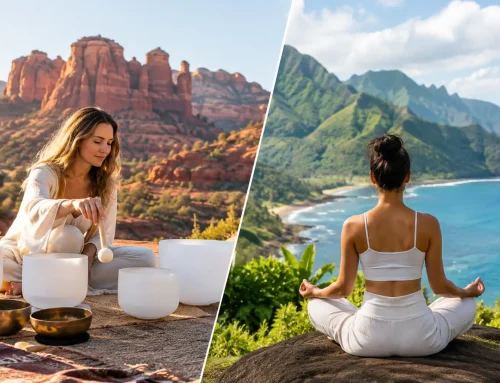
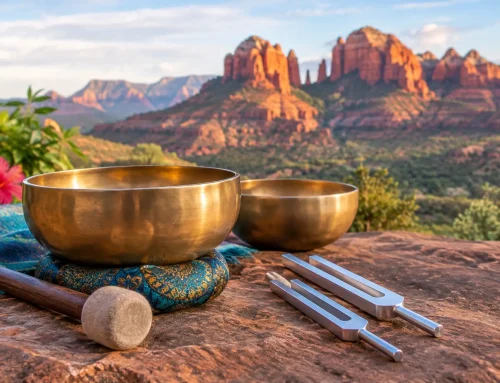
On a Yoga Inspirations retreat, the setting may include sacred landscape, group practice, breathwork, and the resonant tones of crystal bowls. At home, your practice can be just as sincere. A quiet corner, a supportive seat, and your own hands are enough to create a meaningful ritual.
Let Comfort Guide the Practice
Mudras should never cause pain, numbness, or cramping. If you have arthritis, hand injuries, limited mobility, or sensitive joints, adapt the shape. You can bring the fingers close together without touching, use one hand instead of two, or rest your hands openly on your lap while holding the intention of the mudra.
It also helps to release the idea that there is one perfect hand position. The purpose is presence, not performance. If your hands shift during meditation, gently reset them or let them rest. The main point is to do the meditation daily , atleast 5 minutes a day .
Try choosing one mudra for an entire week rather than changing gestures every day. Notice what arises in your body, mood, and awareness. Over time, a particular mudra may become a trusted companion – a small sacred signal that tells your nervous system, “We are coming home now.”
The next time you sit to meditate, let your hands join the conversation. Choose one simple gesture, breathe with it, and allow its quiet message to unfold from within. We hold retreats in : Sedona , Kauai and Big island . “ I came as a 60 year old and left as a 30 year old “, D.G., Canada . Www.yogainspirations.com



Leave A Comment